Give your WordPress site its first task.
Connect the site you already have, add your agent to Slack or Telegram, and tell it what you need.
Connect your siteStart with 500 free credits. No credit card needed.
WordPress already plays audio without a plugin, so the useful question is what a music player plugin adds on top and what it costs you afterwards. The answer is playlists inside page builders, product previews, podcast feeds and radio streams, paid for in JavaScript, file-path fragility and a security record that only updating fixes. Patchstack lists 16 patched vulnerabilities for the most installed player in the category.
WordPress plays audio with no plugin at all. The Audio block embeds a music file, a podcast episode or any other sound file directly in a post or page, with the browser’s own controls. The Playlist block goes further: WordPress’s documentation describes it as a collection of audio tracks played in a single player, where visitors browse the track list, play in order or on shuffle, and follow the current track in an interactive waveform visualization.
So the question is not “which music player WordPress plugin is best”. It is narrower: what does a plugin add that core does not, and what does it cost you three months later. The cost is usually one of four things going wrong, and those four are the same for every plugin in the category. If yours has already stopped working, the general method in our guide to WordPress plugins that are not working applies here too.
The Audio block handles one file per block. Its toolbar includes a Replace control, which matters more than it sounds: the URL of the file you chose is written into the post content, so swapping the MP3 in the Media Library does nothing to blocks you already published. You change the block, not the library.
The Playlist block is the bigger change to the calculation. Multi-track playback with a waveform was the main reason to install a plugin for years. Its documentation opens with a requirements section, so check it against the WordPress version you actually run before you plan around it. Sites on older releases will not have the block, and a page built on a newer staging install will not render it when you copy it down.
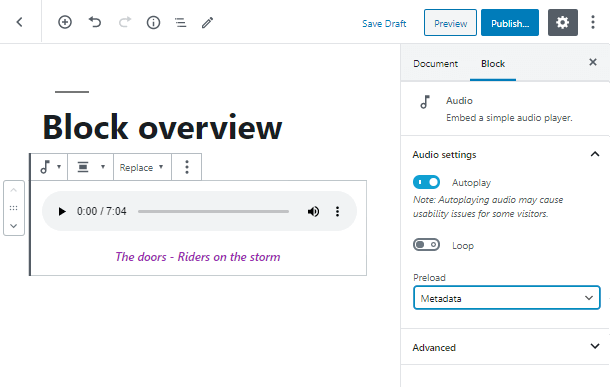
If you need one track in a post, or an album on a release page, you may already be finished. Everything past that point is what the plugin market exists for.
Six things, and most sites need one or two of them:
If your list of needs is empty, do not install anything. A player is JavaScript, and JavaScript on a WordPress site has a maintenance cost that a block does not.
Install counts in this category are small. The leaders sit around 10,000 to 20,000 active installs, not the hundreds of thousands you see in forms or SEO. That means abandonment risk is real in the long tail, and it also means a high install count is not proof of much on its own.
Four signals are worth more than the feature list:
The signal almost nobody checks is the vulnerability record, and in this category it is the one that matters most.
Patchstack’s entry for MP3 Audio Player by Sonaar, the most installed plugin in the category at 20,000 installations, lists 16 patched vulnerabilities and none currently present, against a latest version of 5.14.2. The recent run reads: cross site scripting up to 5.13.1, broken access control up to 5.12, an unauthenticated insecure direct object reference exposing sensitive information in versions 4.0 to 5.10, a server side request forgery up to 5.11, and an author-level server side request forgery in 5.3 to 5.10.
It is not only that plugin. Patchstack lists two patched issues for Music Player for WooCommerce, including cross site scripting up to 1.8.9, and one for AudioIgniter, an unauthenticated insecure direct object reference on the audioigniter_playlist_id parameter up to 2.0.2.
Read that the right way. A plugin with 16 patched issues and zero present is a plugin whose maintainer is fixing things. The danger is the site sitting on 5.9, sounding perfect, with private post content readable by anyone who knows the AJAX endpoint. None of this is visible from the front end. There is no broken layout, no error message, no dead play button. The only remedy on offer for each of these entries is the same: be on a version past the affected range.
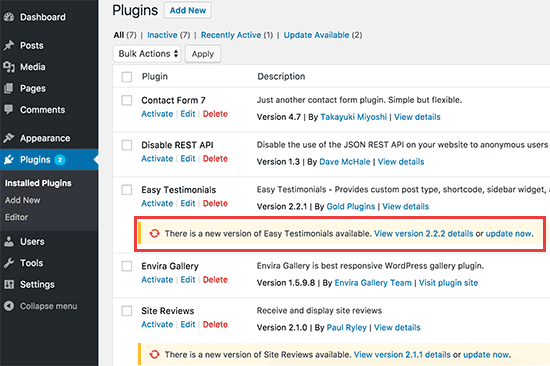
The awkward part is that media plugins are also the ones most likely to break on update, because updates change the markup and the enqueued scripts. So the answer is not automatic updates applied blind, and it is not leaving the plugin alone. It is updating on purpose and then loading a page with a player on it and pressing play.
“Our audio player plugin is three versions behind. Read the changelog, update it, and check the players on the releases pages still render.”
SiteSelf reads the changelog and the plugin’s current version, tells you what is about to change and whether it can be undone, applies the update, then fetches the pages you named and reports what it found. Plugin and settings work runs through the SiteSelf Connector plugin from the WordPress.org directory; if the fix turns into a template or theme-file change, it needs hosting access over SSH. Handing routine plugin updates to your agent is most useful in exactly this category, where the version number is the whole security story.
The limits are worth stating plainly. Verification today is a fetch of the changed page and a plain-language report in chat, so it can confirm the player markup and the script are on the page. It cannot listen to the audio, and it is not a device test. If the release page is owned by Elementor, Divi or Beaver Builder, that page is refused at the moment of work, with the reason. Nothing runs unattended; the work happens when you ask, and what was done is recorded.
The file URL. Most “audio is broken” tickets are a 404. Open the audio file’s URL directly in a browser tab. If it does not load there, no plugin setting will help. This is also what a domain change or an HTTP to HTTPS migration does: the URL is stored in the post content, changing the Site URL setting does not rewrite it, and mixed-content rules then block the old asset silently. Migrate with a proper search and replace across post content, not just the setting. Format matters too: a 24-bit WAV will not play in Firefox, and a server configured to send audio as text/plain or with forced download headers breaks in-browser playback whatever the plugin does.
The player renders but play does nothing. Open DevTools and look for Uncaught TypeError. This is almost always JavaScript aggregation, deferral or minification in a caching plugin. Turn JS and HTML minification off, clear every cache layer, retest. If playback returns, add targeted exclusions for the player’s script and for the core media scripts wp-mediaelement.min.js and mediaelement-migrate.min.js rather than leaving optimisation off site-wide. Keep that exclusion list with the rest of your WordPress speed work, so the next performance pass does not undo it.
No player at all. Check in this order: is the track published rather than draft or private, is the plugin activated and not merely uploaded, does the page source show the shortcode rendered or printed as literal text, and are the attribute names exactly as documented. Copy shortcodes from the plugin’s own management screen instead of typing IDs by hand, or use its block or widget and remove the opportunity for the mistake.
The waveform is blank but the plain player works. Waveform players fetch the audio file over XHR to draw the waveform, which a plain <audio> element never does. A CDN that blocks XHR or omits an Access-Control-Allow-Origin header breaks one and not the other. Fix the CDN headers, serve that file from the main server, or fall back to the plugin’s simple player for that instance. This is the one case where offloading media to a CDN, normally good practice, is the cause.
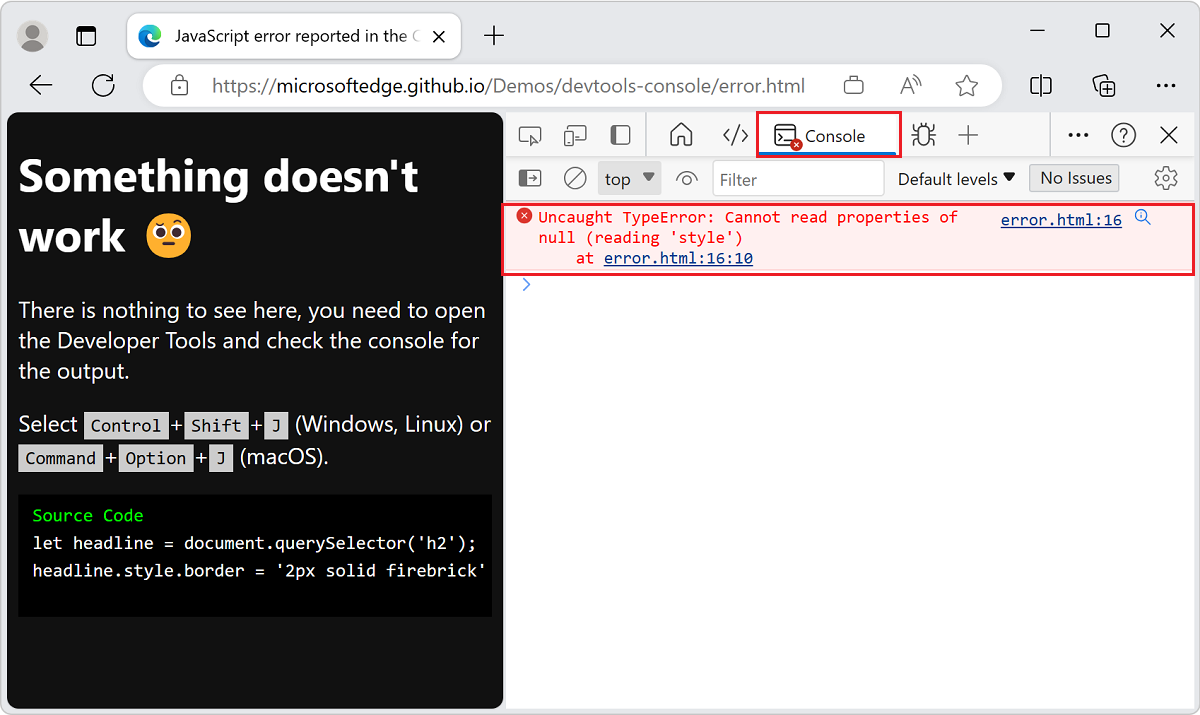
Stop and get help when the console is clean, the file loads directly, minification is off and the player still does nothing. At that point you are looking at a theme or plugin conflict, and the isolation work is worth doing in staging rather than live.
People want music to keep playing while visitors browse. A normal WordPress page load replaces the document, which stops playback. Every workaround trades one problem for another: frames keep the audio alive and break mobile rendering, AJAX page loaders keep the audio alive and interfere with other scripts on the site, a single-page or headless front end solves it and is a rebuild, and a pop-out player window solves it at the cost of an extra window most visitors will close.
Sticky and floating players are not the same thing. They keep controls visible while the visitor scrolls one page. They still stop at the next page load, and a vendor describing the feature as continuous playback is usually describing that.
If you want one track in a post, no. If you want an album with a track list, shuffle and a waveform, check whether your WordPress version has the Playlist block first. Install a plugin when you need a page-builder widget, product previews, podcast feed ingestion, radio streams, custom skins or analytics.
The full file URL is stored in the post content, and changing the Site URL setting does not rewrite it. The old http:// URL stays in every embed, and the browser blocks it as mixed content on an https:// page. Run a search and replace across post content, or re-select each file in the block.
Same cause. The block holds a URL, not a live link to the library item. Edit the block and use Replace in the block toolbar, or upload the new file over the old one at the same path.
Browser policy, not WordPress. Modern browsers block autoplay of audio with sound until the visitor interacts with the page. Give people a visible play control rather than relying on the HTML5 autoplay attribute, and expect custom JavaScript that forces playback to be blocked and to log console errors.
Not completely. Anyone who can hear the file can capture it. You can reduce casual downloading with players that hide the direct file path and serve short-lived URLs, by gating tracks behind a membership or LMS plugin, and by serving previews rather than masters. Treat it as deterrence, not protection.
It depends on whether the plugin enqueues its scripts everywhere or only on pages that contain a player. Check the page source of a page with no audio on it. If the player’s CSS and JS load there, that is the cost you are paying site-wide, and it is worth raising with the plugin’s support before you build around it.
Explainers
“wp list plugin” is one phrase covering four unrelated jobs: taking an inventory of installed plugins, putting a list of posts on a page, building a data table, and recovering a Plugins screen that will not open. The right answer depends entirely on which of those you mean. Name the object you are listing first, and most of the wrong choices disappear.
Read article ›How-to Tutorials
A WordPress drop down list is not one feature. The phrase covers navigation submenus, form select fields, WooCommerce variation pickers and catalog sorting, and each of those is owned by a different system. Work out which one you have before you change anything, because applying the right fix in the wrong place is the most common way this turns into an afternoon.
Read article ›Troubleshooting
A white screen is not an error. It is a fatal PHP error with the message switched off, which is why guessing at fixes takes longer than reading a log. Work the sequence instead: note what is blank, check for the recovery email, turn on logging, read the file path in the error, then isolate the plugin or theme it names.
Read article ›Connect the site you already have, add your agent to Slack or Telegram, and tell it what you need.
Connect your siteStart with 500 free credits. No credit card needed.