Give your WordPress site its first task.
Connect the site you already have, add your agent to Slack or Telegram, and tell it what you need.
Connect your siteStart with 500 free credits. No credit card needed.
A landing page builder for WordPress is not a separate platform. It is either a plugin that creates ordinary WordPress pages or a set of blocks and patterns inside the editor you already have. The choice you are really making is who owns the markup after launch, and how much weight the page carries.
A landing page builder for WordPress is not a separate platform. It is either a plugin that creates ordinary WordPress pages, or a library of blocks and patterns you assemble inside the editor you already have. Either way, what exists at the end is a normal page in your database, rendered through your theme’s template system.
That distinction sounds pedantic until a campaign page breaks. Most regret in this category comes from the other mental model: someone picks the tool with the biggest template library, builds a promo page on it, and then discovers that the page’s speed, its mobile layout and its editability depend on layers the builder does not own. If you want the build steps, read the guide to building a landing page in WordPress. This piece is about what you are actually choosing between, and what each choice costs you six months later.
Every product marketed as a landing page builder falls into one of three groups. They differ less in what the editor feels like and more in who owns the markup once you publish.
| Kind | Examples | What it produces | What is left if you turn it off |
|---|---|---|---|
| Dedicated campaign-page plugins | SeedProd, PluginOps Landing Page Builder, LightStart | Standalone campaign, coming soon and maintenance pages that bypass the theme’s normal layout | The page stops rendering as designed. The content is usually still in the database, but not in a form the block editor can lay out. |
| General visual builders | Elementor, Divi, Beaver Builder, Bricks, Breakdance, WPBakery | Any page or template, built from the builder’s own elements and stored in its own format | Builder-specific markup or shortcodes in the editor. Switching builders means rebuilding, not migrating. |
| Block-based tools and pattern libraries | Core Site Editor, Kadence Blocks, GutenKit, Spectra | Ordinary block content in the page, plus a pattern library to start from | Core blocks keep working. Blocks from the plugin show as invalid content until you restore the plugin or convert them. |
The size difference between these groups is larger than the marketing suggests. WordPress.org lists Elementor at 10 million active installs; its own directory listing claims more than 23 million websites. SeedProd, the largest plugin that markets itself specifically as a landing page builder, sits at 600,000 active installs, and its directory slug is still coming-soon. PluginOps ships 120+ templates in its free version and is a fraction of that size again. Kadence Blocks takes the third route entirely: it extends the block editor with custom blocks and design controls rather than replacing the editor.
Elementor is the default answer in this category, and the usage data supports that. GravityKit’s April 2026 reading of HTTP Archive data puts Elementor on 32.67% of WordPress sites, ahead of the WordPress block editor at 20.62%, wpBakery at 8.52% and Divi at 5.72%.
The speed data points the other way. Gaurav Tiwari’s 2026 comparison of 15 page builders, which tests for speed, code quality, workflow, pricing and lock-in, records Elementor at 1.5 seconds LCP with 68KB of HTML and Divi at 1.7 seconds with 84KB, against GenerateBlocks at 0.8 seconds with 24KB. Those are different amounts of work for the browser to do before anything useful appears.
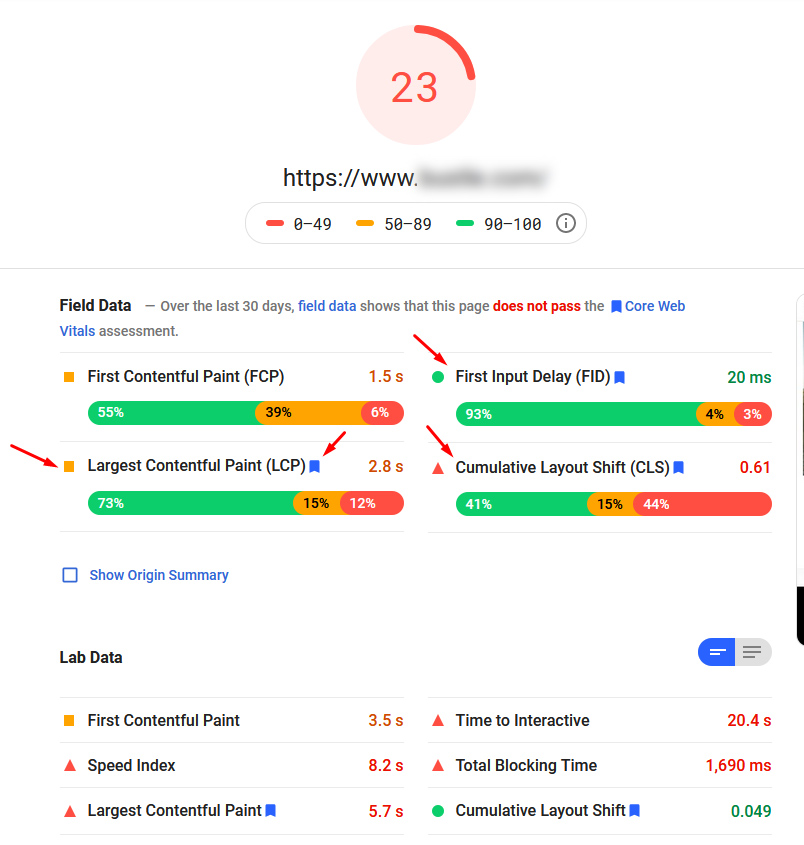
Read that as a loading weight problem rather than an interactivity problem, because that tells you which levers matter. Deeply nested sections, columns and wrappers inflate the DOM. Unoptimised hero images inflate the transfer. Each addon adds another stylesheet and another script. The fixes are image compression and modern formats, caching at the server and the plugin layer, deferring scripts that are not needed for the first screen, and flattening the layout where the builder allows it. That is the same work as speeding up a slow WordPress page anywhere else on the site.
One caveat that the benchmark publishers are honest about: builder choice explains only part of the variance. The same builder can produce a fast page and a slow one depending on hosting, image discipline and plugin count. Test your own finished page on mobile with the real images, forms, consent banner and analytics loaded, not a demo template on a demo host.
Two of the most common questions people type into Google about this subject are how to create a landing page without a plugin, and how to remove the header and footer from one. Both have the same answer, and it does not involve buying anything.
If a block theme is active, WordPress gives you the Site Editor. WordPress.org’s Site Editor documentation says the Site Editor is only available when a block theme is installed and activated; if Appearance shows an Editor item, you have one. Create a template there with no header and no footer template parts, assign it to your page, then build the page from patterns in the Patterns tab of the block inserter. Hero, feature grid, FAQ, call to action: the pattern libraries shipped with block plugins cover exactly those sections, because that is what people build.
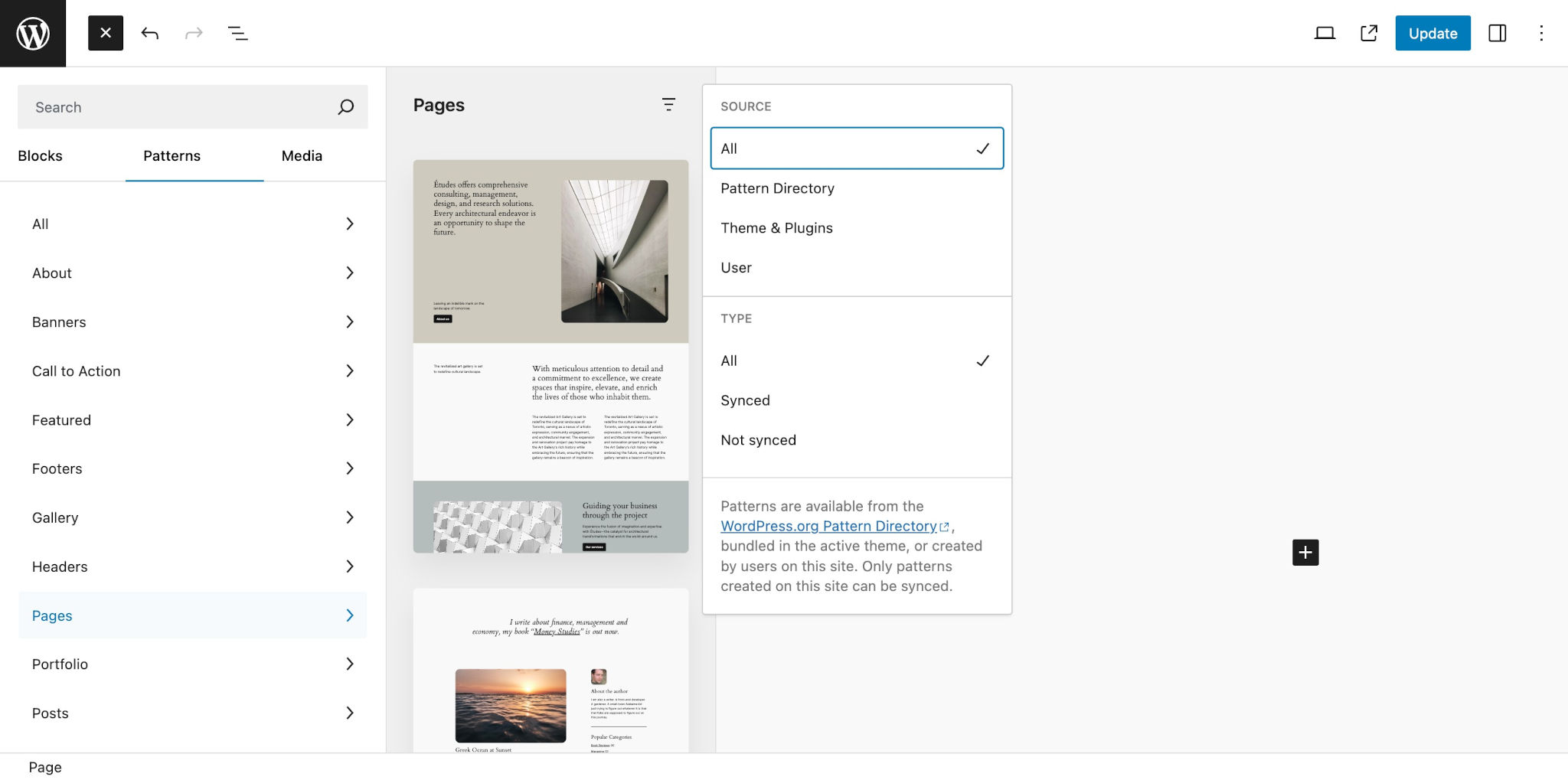
When people say they cannot find the patterns a plugin promised, it is almost always a wrong-screen problem rather than a broken plugin. Patterns live in the inserter’s Patterns tab and in Appearance then Editor then Patterns, not under Posts, and not in the classic editor. Some block plugins also gate a second block behind a companion plugin, so a missing block usually means a missing dependency.
Where the pattern route runs out: popups, multi-step opt-ins, built-in A/B testing and sophisticated form logic. If your campaign needs those, a dedicated conversion plugin or an external tool earns its place. If your campaign needs a page that loads fast, says one thing and has one form on it, patterns do the job with nothing extra to update.
Practitioner reports cluster in a predictable order, and the order is worth knowing because it tells you where to look first instead of blaming the builder.
WP_DEBUG and read /wp-content/debug.log for a file path and line number. Deactivate the suspect, not everything at once. Our guide to WordPress plugins that are not working covers the isolation process in detail.max_input_vars. A 256MB memory limit is the floor people report as restoring normal behaviour in heavy builders. Ask the host to check firewall and ModSecurity rules and send you the server PHP error log.Visual builders expose width, offset and a hide-on-device toggle per breakpoint. Three things go wrong with them. Widths that were never set for the tablet or mobile band squeeze or overflow the content. Offsets copied from desktop create empty gaps or horizontal scroll. And the hide toggle gets used aggressively enough that a section disappears on small screens.
That last one is the expensive mistake. If the hidden section contained the form or the call to action, the mobile page cannot convert at all, and the people who only have a small screen lose information everyone else gets. Check the page on a real phone width with the form visible before you count the campaign as live.
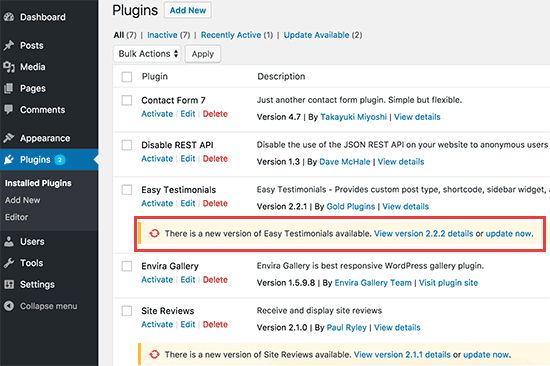
Builder addon changelogs are full of entries like “compatibility with the latest Elementor release” for a reason. When the main builder or WordPress core updates and an addon does not, widgets built on that addon, sliders, modals, feed embeds, stop working on a page that is currently taking traffic. Update addons in step with the builder, read the release notes, and resist the urge to hand-patch a broken layout before you have updated the thing that broke it.
The tool choice is usually not the bottleneck. The waiting is. A headline change, a swapped image, a form field that needs removing before Monday’s campaign: small work, wrapped in a process that costs more than the work does.
Example request: “Our spring promo page is slow on phones. The hero image is a 4MB PNG, the page still loads the slider plugin we stopped using, and the FAQ section is hidden on mobile by mistake. Fix those three and tell me what you changed.”
SiteSelf works on the site as it is. For the FAQ visibility and the image swap it uses the SiteSelf Connector plugin from the WordPress.org directory, which covers content and settings work. For the unused slider assets and any caching or template change, it needs hosting access over SSH. Before it changes anything it says what is about to change and whether it can be undone. Afterwards it fetches the changed page and reports in plain language what it did and what it checked. The work is recorded, so you can see later what happened and undo it. This is the same shape as any other design change on an existing WordPress site.
The honest limits matter here more than in most subjects, because this article is about builders. If the promo page is owned by Elementor, Divi or Beaver Builder, the page is refused at the moment of work, with the reason given. Verification is a fetch of the page and a written report, not a screenshot and not a device test, so a layout you care about deserves your own look on a phone. Nothing runs on a schedule and nothing runs unattended: work happens when you ask, through chat or from Telegram. Nothing is written to your analytics, ad platform or CRM. Pricing is credit-based, so a heavier task costs more than a lighter one; the pricing page has the current detail.
Yes, if a block theme is active. Create a page, assign a template you made in the Site Editor without header and footer parts, then build the sections from patterns in the block inserter. WordPress.org’s documentation notes the Site Editor appears only with a block theme installed and activated.
Do it at the template level, not with CSS that hides elements. In a block theme, duplicate your page template in the Site Editor, remove the header and footer template parts, save it under a name like Landing Page, then assign that template to the single page from the page settings panel.
Not directly through markup, but through loading weight. The measured gap between heavy visual builders and block-based tools shows up in LCP, which is one of the Core Web Vitals. Image compression, caching, deferring non-critical scripts and flattening nested layout wrappers are the levers that move it.
For one campaign page with a form, usually yes. Free tiers from SeedProd, PluginOps, Kadence Blocks and Beaver Builder all exist on WordPress.org. Paid tiers buy template volume, A/B testing, theme building and commerce support, so check whether your campaign actually needs those before paying for them.
Check three things in order. Whether the plugin’s AI provider connection is configured in its settings, whether you clicked the button that creates the page rather than stopping at the preview, and whether the page it created is sitting in Drafts. Several of these plugins create the page as a draft by default, so it exists but is not public.
The split people settle on is intensity-based. Hosted tools suit short, heavily tested paid campaigns where iteration speed and built-in experiments matter and the page has no future. WordPress suits evergreen pages that belong to the site, share its navigation and design, and need to stay indexed and editable for years.
Explainers
WordPress already plays audio without a plugin, so the useful question is what a music player plugin adds on top and what it costs you afterwards. The answer is playlists inside page builders, product previews, podcast feeds and radio streams, paid for in JavaScript, file-path fragility and a security record that only updating fixes. Patchstack lists 16 patched vulnerabilities for the most installed player in the category.
Read article ›How-to Tutorials
A WordPress drop down list is not one feature. The phrase covers navigation submenus, form select fields, WooCommerce variation pickers and catalog sorting, and each of those is owned by a different system. Work out which one you have before you change anything, because applying the right fix in the wrong place is the most common way this turns into an afternoon.
Read article ›Troubleshooting
A white screen is not an error. It is a fatal PHP error with the message switched off, which is why guessing at fixes takes longer than reading a log. Work the sequence instead: note what is blank, check for the recovery email, turn on logging, read the file path in the error, then isolate the plugin or theme it names.
Read article ›Connect the site you already have, add your agent to Slack or Telegram, and tell it what you need.
Connect your siteStart with 500 free credits. No credit card needed.